Lessons Learned While Writing A Short Horror Story

I published “Lights Out” back in the Spring of 2010, but I wrote the rough draft back in 2007. This story went through many incarnations. Most of them were completely ridiculous. Let me tell you why.

Beta readers can be a wonderful asset. Sometimes writers can get too close to their work, falling so deeply in love with their own writing that they miss major plot holes or wonky characterizations. Or the complete opposite occurs and the writer thinks their story is a total drag, an embarrassing mess that should be deleted to the void and forgotten about forever. The beta reader can help us writers in a few ways.

1) They can bring us to the realization that our literary darlings aren’t as dazzling as we think they are, bringing us back down to earth from our ethereal writing heaven.

2) They can emphasize what is working when we falsely think every word is dead on the page.

3) They can drive us crazy, sending us in a vicious cycle of endless revisions and editing.

Number three is what happened to me. At the time I was writing “Lights Out”, I was also taking my first creative writing class. The idea for the story had been on my mind for some time and I decided I could use it for the class and find ways to really improve the story from class instruction. Early on, the instructor for the class, a stocky bald man who went by Dr. Armstrong, emphasized the importance of dramatization, especially when writing a short story of eight pages. In the first draft I summarized too much. You know the old saying every writer gets pounded on the head with now and then: “show don’t tell.” I was telling too much. “Too much exegesis. Dramatize. Cinematic rendering.” I think these were some of the comments my instructor wrote on the first draft.

When it came to my fellow classmates’ comments, they had a far different issue with my story. Their issue had something to do with my use of enigma. “Lights Out” is a story about a detective investigating a scene where a young boy’s parents have mysteriously died. Blood seeps out their ears, darkness has engulfed their eyes. The boy feels certain he is the cause of their death, and Detective Palmer believes this troubled guilty reaction is just the trauma talking. He plans to take the boy to his grandma’s after further investigation at the police station. Matters turn very bad on the drive to town. A deer runs out in the road, causing the detective to wreck the car into a tree. Stranded and waiting for backup, the boy unveils to Detective Palmer that he has a strange light inside him, a power, an entity, that when awakened can cause devastating effects. This power is demonstrated, and when other detectives arrive on the crash scene, Detective Palmer is dead (exhibiting the same death signs as the boy’s parents), and the little boy is gone, until they get a clue of his whereabouts, a mad cackling in the woods.

Fellow classmates liked the story. They were fascinated by the concept and the eerie atmosphere of it, but the enigmatic ending bothered them. Many of my classmates deluged me with numerous ideas of how the story should end; they wanted it wrapped up in a pretty bow. Others suggested the eight pages written were the prologue to a novel (this I have considered, though I haven’t seen the rest of the story yet). I took every one of their comments seriously. I wanted to please every one of them. Let the maddening vicious cycle begin. I ended up rewriting the story nearly a dozen times, trying to correct what everyone saw wrong with the ending. My various incarnations of the story grew so out of hand that they no longer resembled the original draft.

One day Dr. Armstrong flat out told me just to ignore them. I was hesitant to do this. Wasn’t that rude? Didn’t they have something helpful to add to my story? My instructor insisted, “Ignore them.” I did.

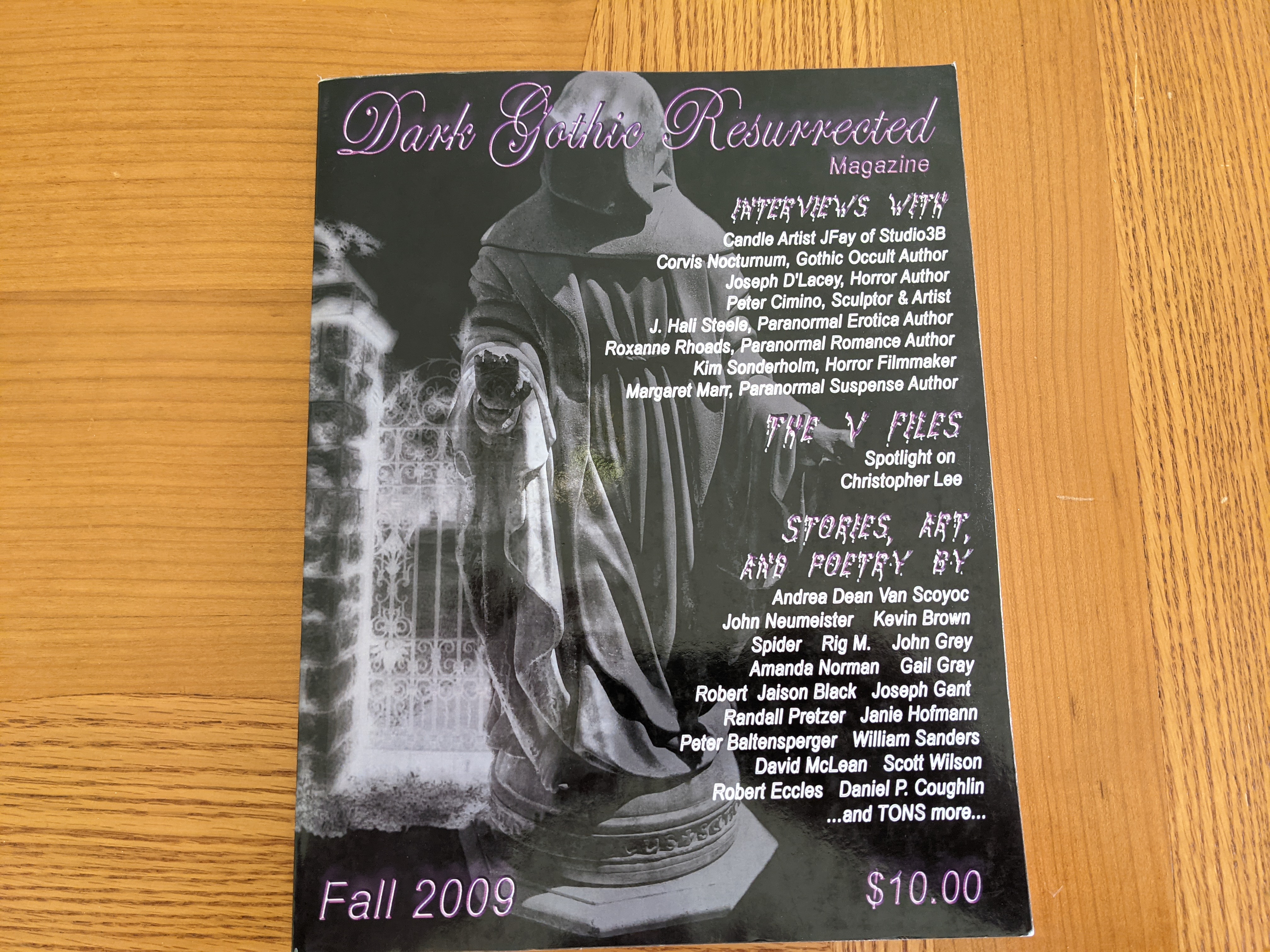
A couple years later I returned to the original draft of this story, polished it up again, and submitted it to Dark Gothic Resurrected. The chief editor, Cinsearae S. appreciated it, replying in the acceptance letter that it was “creepy as hell.” I was glad it found a home. All these years later it has found a new home, a reprinting in Dark Dossier.

I learned a couple lessons from writing this story. Even though beta readers are invaluable for the purpose of helping you see your story in new ways, at the end of the day you’re not going to please them all. You’re the boss of your story when it comes down to the bottom line. Also, not every suggestion they make is correct. I think the enigmatic ending of my dark tale works better than a more unambiguous ending. The enigma sends that thrilling shiver up your spine and stimulates conversation amongst readers, allowing them the pleasure to puzzle over together what happened in the ending.

If you’d like the pleasure to puzzle over this dark mystery of my imagination, you can find my story in two locations below:
Dark Gothic Resurrected

Dark Dossier

A Bit About Me: My First Story Publication

Do you remember the first time one of your short stories was accepted for publication? Your baby, the work of art you spent hours, days, even months perfecting finally found a home. Science fiction author Philip K. Dick (Do Androids Dream of Electric Sheep, A Scanner Darkly) claimed that the publication of his first story was the most magical moment of his life, and remained so even later in his career after he published dozens of novels.

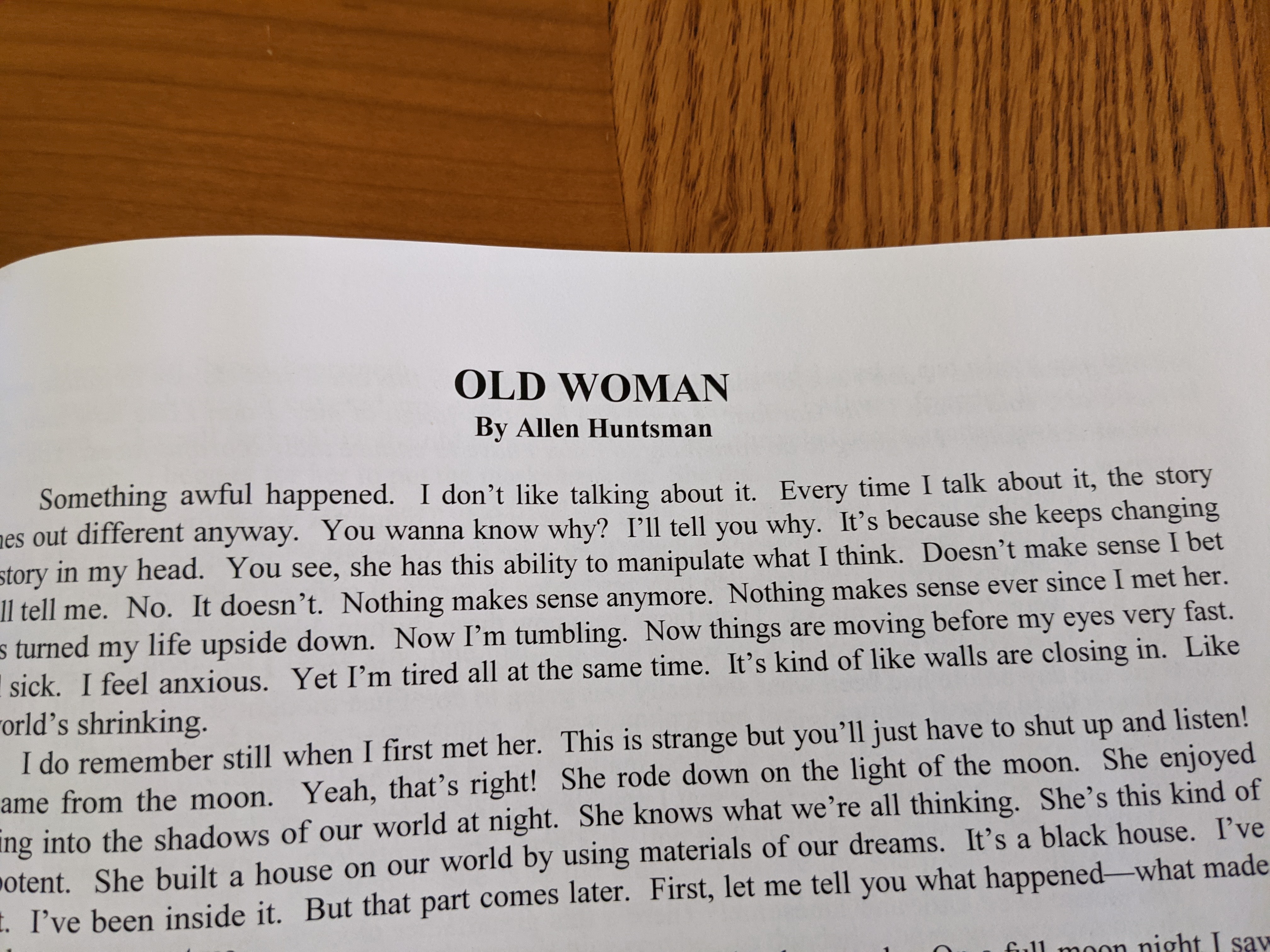
While I can’t claim that my first publication was the most magical time of my life, I definitely can say it was still very exciting. I had spent the past three years writing stories and submitting, piling up those rejection letters, the expected process every seasoned writer tells you about. “Old Woman” was my first publication, but it was not the first story I had written, nor was it the best. I had gotten lucky, I think, in finding a fledgling magazine and making the submission at the right time. I launched a dart in the dark and by good fortune hit the target, so to speak. Not that I want to put the story down, either. No, I like this story. I like the frenzied, dizzying imagery and the sense of paranoid drama developed in the first person narration.

“Old Woman” came to me one morning in a quick flash. I saw in my mind’s eye a haunting image of a witch-like woman, beautiful and alluring when you first meet her, until she possesses you, and then she becomes a malevolent old hag, wreaking havoc to your mind, driving you insane. I wrote the first draft in about an hour, then polished up the draft over the next couple days. The main character, a man named Gordon, rants and raves in paranoid madness about the entity that has called his mind home, building a castle using his thoughts and dreams. Ultimately, she is destroying him in this diabolical takeover.

My euphoria seemed uncontainable that morning when I received the acceptance letter from Dark Gothic’s chief editor Ms. Cinsearae S. I called my mom, some of my brothers, cousins. I paced the living room, exclaiming celebratory remarks. Later that evening at work I was telling random strangers the good news. I could finally say I was a real author. Someone else liked my work well enough to exhibit it in their magazine.

What was the experience like for you when you received that first publication acceptance letter?

If you’d like to read my story along with other great tales about vampires and the paranormal, you can get a copy of the Dark Gothic Resurrected Magazine Fall 2009 issue here.

Horror…Why Did It Have To Be Horror?

Don’t be fooled by the title. I’m a big horror fan. In fact, it’s my mainstay. When a work in progress of mine gains fruition, and I see a horror story emerging, I tend to say to myself, “Horror…why would I have imagined it to be anything else but horror?”

It’s a question horror authors are often asked. What attracts us to pondering those hidden dark corners of the universe? What drives us to explore the baser parts of human nature? Horror writers come up with all kinds of answers to this question.

Robert Bloch, the author of Psycho, answered this question with some irreverent humor. He said, “People hear that I’m a horror writer and they think I must be a monster, but actually I have the heart of a small child. I keep it in a jar on my desk.” Enough said. The ghoulish connotation causes the questioner to hesitate about pursuing the question further. Yet the tongue in cheek sarcasm allows for good-natured conversation to continue. Nice deflection. The truth is, writers of horror don’t completely know why they’re attracted to that which goes bump in the night. Does it give us a thrill? Sure. Does it help us understand the darker workings of the human condition and the universe? Maybe, although I wouldn’t say we understand beyond a mere conjectural, academic point, despite all the research we might do on some horrific topic. For many of us, we’ve been courting it since childhood. Horror almost seems to be a built-in part of the original package.

Some authors have tried to to give a more meaningful answer to the questioners. Stephen King even wrote a near 500-page book on the subject called Danse Macabre. One of the book’s overarching themes seems to say that “imaginary horrors help us deal with the real horrors.” There’s some truth to this. If we understand a fictional story to be a vehicle for exercising our emotions, the horror story allows readers to overcome their anxiety along with the characters they’re reading about. We feel the same relief a main character feels when they escape or destroy the monster. It also allows the reader to confront that which they’re afraid of, allowing for the possibility to learn to cope with said fear. As a child, I was terrified of sharks after seeing the film Jaws. However, a gripping fascination accompanied this fear. I became compulsively driven to learn all I could about sharks. H.P. Lovecraft stated that “…the oldest and strongest kind of fear is fear of the unknown.” You could say my terror of the ferocious beast in the Steven Spielberg movie compelled me to learn if real sharks were just as seemingly malevolent. The more I learned they were not, the more fascination replaced the feeling of terror. I guess you could say that which was “unknown,” in Lovecraft’s terms, updated to “known,” allowing me a greater control over my fear. A useful emotional exercise. However, not all the fear is gone. A healthy amount of it remains. You won’t ever find me swimming in the ocean. Sometimes real sharks show flashes of the mythic Leviathan’s ferocity.

Richard Laymon, author of The Woods Are Dark, claimed that, “Horror writers are specialists in the worst case scenario.” This is true. The horror writer envisions a situation and asks the question, “How bad can it get?” Then the horror writer puts a set of characters in the bad situation and watches whether they make prudent decisions to overcome the worst case scenario, or bad decisions that cause them to sink deeper into the unfortunate muck. More often than not, we see the latter. The characters in a horror story are commonly more frightening than the monsters. The unworldly monsters serve to reveal the monstrous in the human characters, consider stories like Stephen King’s The Mist.

I personally prefer Robert Bloch’s tongue in cheek boyish irreverence. His answer admits that he doesn’t have an exact answer to why he writes horror, and he doesn’t care. Nothing in Robert Bloch’s answer feels like a stretch. Nothing about it seems to be trying too hard. Nothing about it emanates the pretension of self-importance. He’s comfortable in his own horror writer skin. All of us horror writers should be.

Danse Macabre by Stephen King- Available on Amazon.