Crossing Subgenres

I learned this writing exercise from Tim Waggoner’s instructional book “Writing in the Dark.” It’s a fun way to explore the muscularity and flexibility of story ideas, and a great way to uncover unique ideas.

First, pick one of those story ideas you’ve stowed away in a notebook somewhere. Here’s one of mine: What if a man discovered a strange alien monolith buried in the middle of the desert and becomes possessed by alien entities as he dabbles with it? Initially, it seems to fall in the science fiction/creature horror subgenre. But…what other areas could the idea cross into?

Step two is just that: crossing over. What if this were a psychological horror story instead? Perhaps he’s a professor who finds some Native American artifact, becomes possessed by his obsession with it, and the alien entities are the symptom of his madness instead. What other places could we take it? If this is a supernatural possession, we can cross over into the realm of cosmic and body horror as well, overlapping subgenres.

I highly recommend Tim Waggoner’s book, especially if you write in the genre of horror. However, I think some of the writing exercises from his book are applicable in other genres as well.

Let me know what you come up with using this exercise.

Why Do You Get Writer’s Block?

Today I want to discuss a writer’s arch nemesis: writer’s block. Writer’s block has many minions of many shapes and sizes. Today I want to take on a few common reasons.

One common reason is lack of interest in what you’re writing. Perhaps you’re trying to chase the marketplace, hoping to catch a popularity wave. Or maybe you think friends and relatives will be pleased by what you’re writing (much of the time, I’m afraid, you’ll discover they aren’t pleased). However, every time you sit down to work on a project, your blood is cold. Every sentence, paragraph, plot point, and character seems stilted, trite, awkward, and lifeless. Sounds like you need to pick a new subject, something that excites you to sit down before the computer or notebook. Readers can tell when a writer doesn’t believe in or enjoy what they’re writing.

Another reason is becoming overwhelmed by the size of a project. It’s hard to sit down imagining the next several months to a year you will spend working on a novel. Such thoughts can overwhelm the writer. As Stephen King once said, I paraphrase, it can feel like floating along the ocean in a bathtub. Instead of looking at the full scope of the project, break it down into smaller tasks. Today you will write one scene, or you will write for one hour. Over time, that one hour per day will prove to be quite fruitful.

Perfectionism is another common cause for writer’s block. Do you find yourself reediting the same page over and over to the point that you and your test readers are ready to rip their hair out? Do you overthink an idea to the point it turns to mush? It’s time to calm down and quit being a control freak. Even some of the most popular movies and works of fiction exhibit imperfections. I started to make a rule for myself: four drafts, and then I’m done; it’s time to send it into the world, even if there is a wart or two. At least I’m being productive, which is more important to me than being perfect.

How do you tackle writer’s block?

Goodbye to Writer’s Block: All Thanks to the Pomodoro Technique

Over the past several months I was struggling with writer’s block. Everything I tried to write crumbled like wet paper. Recently, I came to realize the reason for my writer’s block, and the means of fixing it.

Writing a story can be quite a task, especially if it’s a novel. You could end up spending three months to a year writing a novel. The enormity of the task can be overwhelming. I found even the task of sitting down for a few hours to work on a story to be overwhelming at times.

Then I discovered the Pomodoro Technique, the method that turns time into your ally, breaking it down into manageable chunks. The technique is simple:

Step One: Pick a task (in this case it’d be writing).

Step Two: Write for twenty-five minutes straight.

Step Three: Take a five minute break.

Step Four: Repeat four times.

Step Five: Take a thirty minute break.

Keep in mind, you don’t have to follow the process stringently if you don’t want to. For instance, you could break your twenty-five minute sessions throughout the day in any way you want. Instead of sitting down before my notebook thinking to myself, “I’m going to write an entire story,” or “I’m going to write for four hours,” I said to myself, “Let’s go for twenty-five minutes and see what we can get down on paper.” Twenty-five minutes didn’t overwhelm me in the way four continuous hours would have. I could manage twenty-five minutes. After my five minute break, it was easy to say to myself, “Hey, I can do another twenty-five minutes, can’t I?” I sure could. It’s a simple psychological trick that gets you focusing on each tree one at a time as opposed to the enormity of the forest. If you’re stuck in the rut of writer’s block for similar reasons, I highly recommend the Pomodoro Technique. It’s a great way to build a writing routine for yourself, and the fun quotient increases as well.

Working Title: Love Bites

I completed the rough draft of a new story! I am very excited.

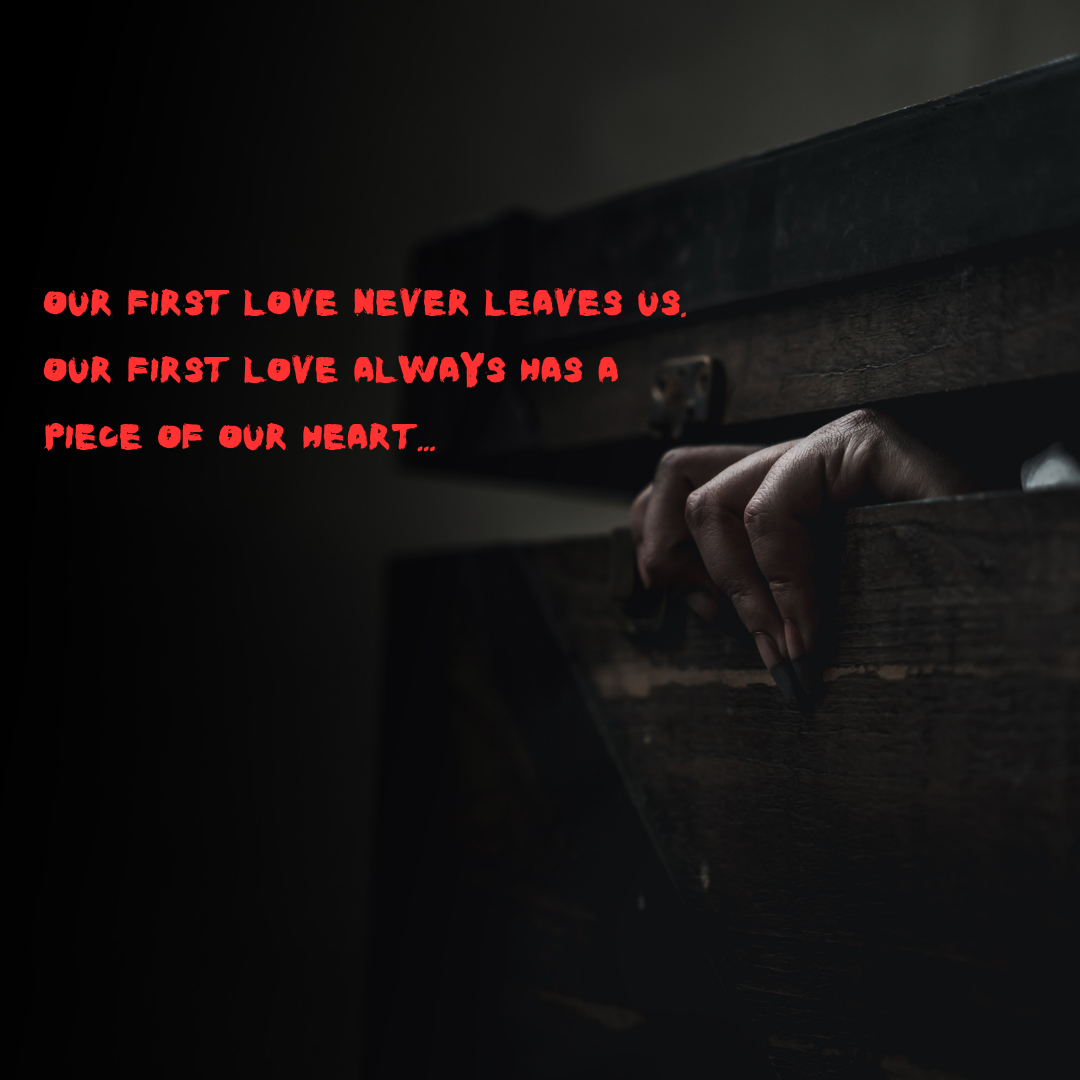
So the rough draft of this story turned out far better than I expected it would. The plan: Allow it to rest for a couple weeks, and then it will rise for the revision process. In the featured image are the first lines of the story. This is a love story, a love story that turns in a very tragic direction. It’s also a story about how we relate experiences to one another, and how people respond to them. In other words, it’s a story about storytelling. The working title for this story was “Love Bites.” However, that sounds a bit gimmicky. Maybe I’ll change it to “A Piece of My Heart.” But that sounds so pretentious. I don’t know. Such decisions can be saved for the revisions.

A Nostalgic Return and the Renewal of a Writer’s Journey

I was gripped the other day by a sudden jolt of nostalgia. You know the feeling. It’s when some sensory stimuli triggers an entrancing, meaningful memory. Maybe the smell of smoke in early winter reminds you of Christmas time and family fun from your childhood. Perhaps an old movie you loved to watch as a kid causes a glimmer of the same excitement you felt back when you couldn’t help but frolic throughout the living room pretending to be the hero of said movie. Well, I recently stumbled across something that reminded me of my undergraduate college days, a time when you’d often find me guzzling caffeinated beverages (writing fuel, I called them) while cramming to complete midterm papers a day before they were due. Ah, the good old days.

What is nostalgia? How does it really influence us? Is the nostalgic return a refusal to take responsibility for problems in the present by hiding in pleasures of the past, thus delaying progress? Or is it an effort to reacquire tools, solutions, or a renewed faith from successes in the past for the purpose of overcoming present problems? I guess, depending on the circumstance, it could be both. However, in my case, I would argue the latter applies. The object which triggered my nostalgic return was an old book I used for a college Creative Writing class. The book was titled, “Behind The Short Story: From First To Final Draft,” edited by Ryan G. Van Cleave and Todd James Pierce.

The Final Draft. That sounds like a wonderful place to be. Lately, I seem to have forgotten how to get there. I’m lost at sea, adrift. A faint flicker of hope warmed my heart while I brushed the dust off this book, remembering moments attending the class the book was assigned for. Back then I had confidence. Not just confidence. I was a little arrogant, and ignorant of my limitations. Nowadays I’ve become well acquainted with my weaknesses, especially the more I see time slipping away like the sand seeping from the hands of the narrator in Edgar Allan Poe’s poem “A Dream Within A Dream.” Writing is a lonely job. Stephen King once described it as like floating across the Atlantic ocean in a bathtub, and he’s right. You’re floating along a vast ocean of words hoping for meaning and much of the time all you’ve got for company are your weaknesses, glaring down at you mockingly as you stumble from word to word.

The book reminded me in the smallest way of what it felt like to be confident again. I remembered that first day of class when we so easily imagined we’d become the next Ernest Hemingway or Virginia Woolf, even if it was a bit arrogant. The book also made me realize I could try again, a little of that renewed faith. This time I could dig a little deeper into the book’s insights and utilize the suggestions with more sincerety. This time perhaps I could cross the treacherous Mariana Trench that stretches between the first and final draft. What if this time I even became a better writer on the other side? By the way, you’re welcome to join me on my journey if you like.

The nostalgic return isn’t just sappy escapism. Sometimes it can revitalize your life.

Nightmare Shard: An Exploration Of Minds

Image by Ivan Aleksic

Some minds are like a beautiful meadow, a field of grass dotted with colorful flowers. Thoughts flow like a crystal clear stream. A mind of pristine concinnity.

Others resemble a grotesque dungeon, a constricting space of stirring shadows and rattling chains. Thoughts wander blindly like prisoners, wailing at walls of misgiving and despair. A mind of haunted asymmetry.

Graffitied Soul

Image by Nate Bell

One day I was rummaging through some old folders filled with long forgotten free verse poems I wrote back in high school. Much of the experience was nostalgic. I could remember the very place I wrote some of them all those years ago: the doorway to the faculty lounge and the round table by the trophy case. I could vaguely remember the emotions motivating each piece, most of it teenage angst of feeling like a misunderstood mutant. Nothing was salvageable from the folders, nothing except a title: Graffitied Soul.

I was on the phone with my brother at the time, a man who is a singer/songwriter. I was reminiscing with him about the old days of my youth, reading him a passage or two from these old stack of poems, and usually we got a good laugh from it. Sometimes we cringed. Then I picked up one with that title: Graffitied Soul, and my brother said, “I think you might have something there.”

The original words to this poem were absolutely dejecting. Not that I’m totally against darker themes; I am a horror writer after all, but this one just seemed destined to be something else. The story is always the boss; I merely give it a place to grow. One morose passage declared, “I’m a disease. Burn me alive.” My brother and I bounced around ideas, hoping to update it, to find new meaning out of the intriguing title. Below I will share with you what I came up with. The plan is to utilize the words for a song one day.

Here goes nothing:

“There you stand on the evening horizon, looking back on how far you’ve come. Windin’ trails that lead to abandon. Memories forever sewn in the dark.

And that’s your soul. Graffitied Soul.

Raindrops obscure the view outside the window, a view of a world moved on. Hearts broken. Stale grudges. Lay it to the dust. I’ve forgotten you cuz I was staring in the sun.

And that’s your soul. Graffitied Soul.

Like a train moving on to the fading horizon, time once again is on your side. No longer shall you molder in the dust of dried out umbrage. Time is but a mote on an eternal sea.

And that’s your soul. That’s your soul. Graffitied Soul.”

There you have it. It’s still probably doggerel, but it beats the original lyrics that declared “I’m a disease. Burn me alive.” So I’ll take it!

DeathGroundWriter Workshop: Exploring Your Character’s Private Room

Image by Aaron Burden

You’ve probably heard this writing metaphor before when it comes to characters: what is depicted on the page is just the tip of the iceberg, hinting at something more vast and complex beneath the surface. The vast structure beneath the surface of what you see depicted in a scene is the backstory of that character: what came before to make them who they are in the present. Even if those buried traits do not rise to manifest themselves directly in a scene of your novel, they still serve as an indirect influence in subtler ways.

I like to imagine my character alone in their bedroom. Maybe this room is a small studio apartment, or one of many in a grand mansion. Perhaps your character is a drifter staying in motel rooms or sleeping on strangers’ couches. Whatever the scenario, how they interact with that room will tell you a lot about them. Are they extremely tidy? Do they carefully fold each piece of clothing and stack it in the same place every night? Do they feel near panic at the slightest sight of dust and must clean it immediately? Why? What influences them to be this way? Did a family member from their past exhibit this same behavior? Does your main character still hear this family member’s demanding voice echoing in their mind? If the room is tidy or messy it reveals a lot about the character’s personality and backstory. Explore it.

What else can you describe about his/her private room? Does abstract art hang on the walls? If so, what does that tell you about your character’s way of thinking? Perhaps instead they like to display pictures of family. This tells you family is special to them. Why? Is their a particular family member they value most? All kinds of character revealing pathways to explore in the art and decorations throughout the room.

There’s one important question I always ask myself when exploring a character’s private room. This question really penetrates the heart of them, the juicy center: what secrets do they conceal in their room? It may be an object hidden in the closet or under the bed. What does that object mean to them? Why is it kept hidden? This question can lead to some fascinating answers about your character, and sometimes the answer is the course of a plot, which happened to me while writing a short story called “The Butterfly Girl” (unpublished). I discovered that a hat belonging to her father was very special to her, because it triggered precious memories to her mind about fishing with her deceased father when she was a child. Later she uses the hat as part of a conjuration ritual in an effort to contact her deceased father’s spirit.

The secret doesn’t have to be an object. It could also be an activity they practice alone that nobody knows about. Either way, exploring your character’s bedroom is an invaluable tool for character development and backstory.

Happy exploring!